Google, NVIDIA and Emerald AI Launch an Energy Alliance for Flexible AI Data Centers
The AI Energy Management Alliance wants data centers to reduce electricity demand when grids are stressed. Here is why flexible AI compute could change the infrastructure race.
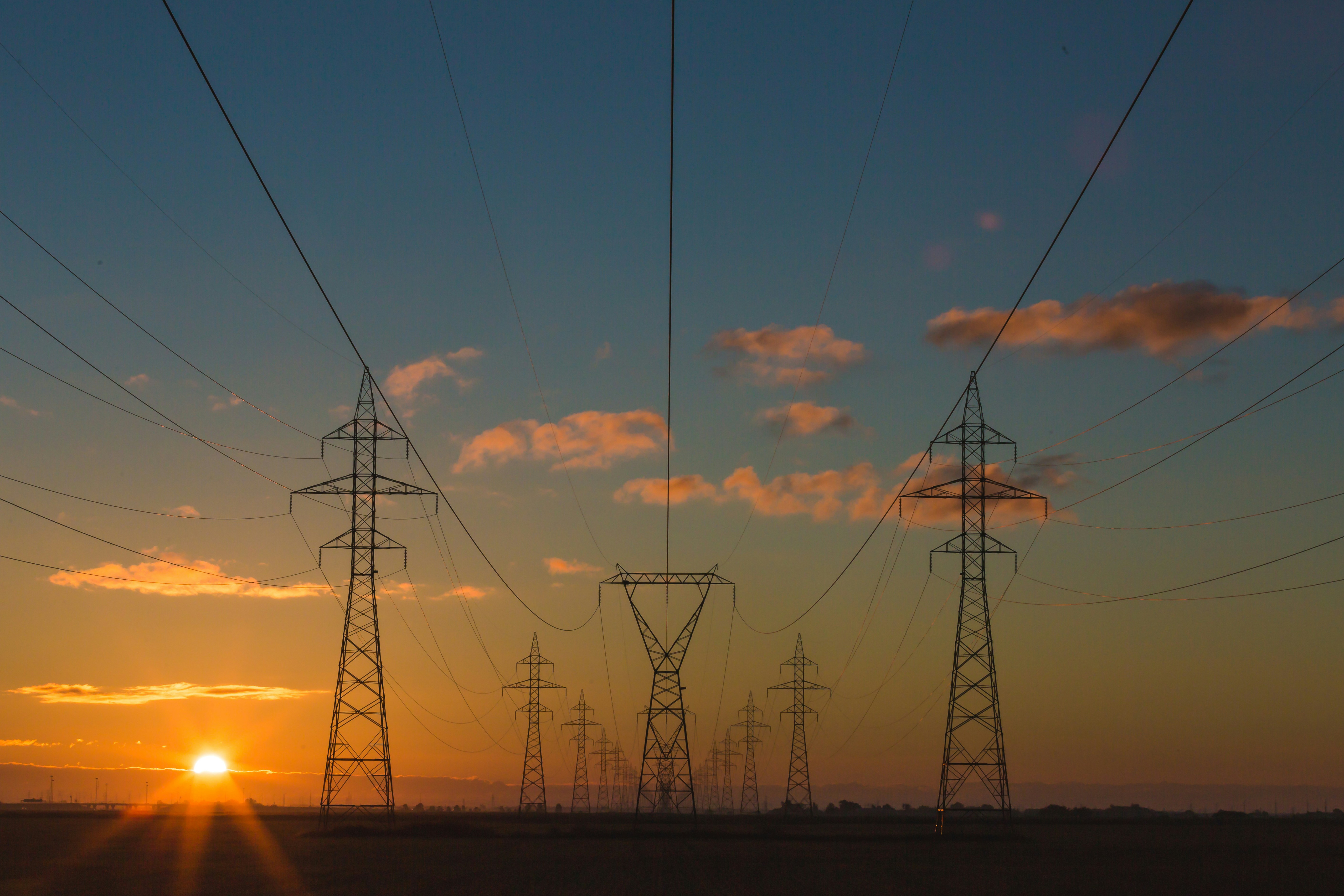
Google, NVIDIA and Emerald AI launched a new coalition on September 16 aimed at one of the biggest constraints facing the artificial-intelligence boom: electricity. The AI Energy Management Alliance, or AEMA, is bringing technology companies, utilities, power producers and data-center operators together around the idea that AI facilities should become flexible participants in the electric grid rather than permanently operating as inflexible loads.
The concept sounds simple. During periods when the grid is under stress, a participating data center could reduce or shift some electricity consumption. In exchange, projects that can prove this flexibility may be able to connect faster or at larger scale because utilities would not have to assume that every megawatt requested by the facility will be consumed at the worst possible moment.
NVIDIA describes the alliance as an effort to develop common technical and operational approaches for grid-responsive data centers. Axios reports that the coalition includes roughly 20 companies and organizations across the AI and energy sectors, including Anthropic and major power-industry participants.
Electricity is becoming part of the AI stack
For most software companies, electricity used to be an operating expense hidden behind a cloud bill. Frontier AI has changed that relationship.
Large AI clusters require so much power that electricity availability can determine where and when a project is built. GPUs may be ready, financing may be secured and the building may be planned, yet the project can still wait for transmission upgrades or a utility connection capable of supporting its load.
That makes energy infrastructure a competitive variable alongside chips, networking and model quality.
NVIDIA has increasingly described large computing campuses as "AI factories," emphasizing that the system should be optimized as a whole. Earlier this year, the company and Emerald AI announced work with energy providers on flexible facilities built around NVIDIA's Vera Rubin DSX architecture and DSX Flex software.
The new alliance expands that idea from individual projects into an industry coordination effort.
What flexible compute actually means
Not every AI workload needs the same amount of electricity at exactly the same moment.
Some tasks are highly latency-sensitive. A production voice agent, fraud system or customer-facing inference service cannot simply disappear for an hour because electricity demand is high. Other workloads have more scheduling freedom. Batch inference, evaluation jobs, data processing and portions of training pipelines may be able to shift in time or reduce power temporarily without breaking a customer-facing service.
A flexible data center can exploit that difference. Software can classify workloads by urgency and coordinate computing demand with grid conditions. Onsite batteries or generation can add another layer of control.
Emerald AI's role is particularly relevant because its technology is designed to orchestrate compute flexibility alongside energy resources while preserving service requirements for AI tenants.
This turns workload scheduling into an energy-management problem.
Why utilities care
Electric grids are built to survive peak demand, even though those peaks occupy a relatively small portion of the year. If a new data center must receive its full requested capacity during every possible peak, the utility may need expensive new generation, substations or transmission before approving the connection.
If the facility can reliably reduce demand during a constrained period, some of that infrastructure may not be needed immediately.
NVIDIA and Emerald AI have argued that flexible AI factories could unlock substantial capacity from existing U.S. power infrastructure. Those figures should be treated as projections rather than guaranteed available power, but the underlying principle is well established in electricity markets: demand response can help balance a grid without adding generation for every short-lived peak.
The unusual part is the scale. AI campuses are turning demand response from a program associated with industrial loads into a core design question for computing infrastructure.
The difficult word is "reliably"
The alliance's success depends on whether flexibility can be measured and enforced.
A utility cannot plan around a promise that a data center "usually" reduces demand. It needs to know how many megawatts can be removed, how quickly the facility responds, how long the reduction can last and what happens when the operator fails to perform.
That means common measurement and verification standards may be as important as the underlying software.
Axios notes that regulatory approval and credible verification will be central to whether flexible facilities actually receive faster grid connections. If flexibility becomes merely a label used to move projects ahead in an interconnection queue, the approach could shift risk to other electricity customers rather than reduce it.
The consumer-price question
Data-center electricity demand has become politically sensitive because households and businesses worry that infrastructure built for AI will raise their power bills.
Flexible operation offers one potential response. A facility that reduces consumption during expensive peak periods can place less stress on the system than an equally large inflexible load. Better utilization of existing transmission and generation can also reduce the amount of new infrastructure required solely for peak conditions.
But flexibility does not automatically mean lower bills. Electricity prices depend on local market structure, generation costs, utility investment, transmission constraints and who pays for upgrades.
Communities should therefore look for measurable commitments rather than broad claims that an AI campus will "help the grid."
What this changes for AI infrastructure planning
Companies planning large AI deployments increasingly need energy expertise much earlier in the process.
The traditional infrastructure question was how many accelerators a workload required. The modern question includes where those accelerators can receive power, how quickly the site can connect and which workloads can tolerate energy-aware scheduling.
That can influence architecture. A company might keep latency-sensitive inference at a stable facility while directing flexible batch workloads toward campuses that participate more aggressively in grid programs. Software schedulers could eventually optimize not only for GPU availability and token cost but also for electricity constraints.
Our coverage of NVIDIA and d-Matrix's inference infrastructure collaboration shows the same broader shift: AI performance is increasingly determined by the architecture around the accelerator, not the chip in isolation.
Bottom line
The AI Energy Management Alliance reflects a practical reality of the AI race: compute growth cannot be separated from the electric grid that powers it.
Google, NVIDIA, Emerald AI and their partners are betting that data centers can gain faster access to power by proving they can behave more intelligently when the grid is constrained. If utilities can verify that flexibility and operators can deliver it without disrupting critical AI services, the model could help expand computing capacity without designing every connection around maximum demand at every hour.
The next test is implementation. Common standards, utility agreements and commercial-scale deployments will determine whether flexible AI factories become a meaningful grid resource or remain an attractive infrastructure concept.
Editorial research note
How we reached this guidance
We reviewed NVIDIA's September 16 announcement of the AI Energy Management Alliance, Axios reporting on the coalition and NVIDIA's March documentation of earlier flexible-AI-factory work with Emerald AI and energy companies. We distinguish the alliance's goals and technical proposals from grid capacity that has already been unlocked, and do not treat projected benefits as guaranteed outcomes.
Decision framework
| Scenario | Recommendation | Why |
|---|---|---|
| A data-center developer faces a long utility interconnection queue | Evaluate whether verifiable load flexibility can support a faster connection | The alliance argues that data centers able to reduce demand during constrained periods can use existing grid capacity more efficiently. |
| An operator considers every AI workload equally interruptible | Classify workloads before offering grid flexibility | Training, batch inference and latency-sensitive production services have different tolerance for power-driven scheduling changes. |
| A community is promised that flexible data centers will automatically lower electricity prices | Require measurable performance and utility-specific analysis | Demand flexibility can reduce peak stress, but actual consumer costs depend on local generation, transmission, contracts and regulation. |
| A company evaluates AI infrastructure only by accelerator performance | Include power availability and grid constraints in capacity planning | For gigawatt-scale projects, access to electricity can determine deployment timing as directly as GPU supply. |
Primary references
- NVIDIA: Emerald AI, Google and NVIDIA launch AI Energy Management Alliance
- Axios: Tech giants launch flexible-power coalition for data centers
- NVIDIA Newsroom: Flexible AI factories as grid assets
Reviewed on September 16, 2026. Unless an article explicitly states that TECHMUNDI performed hands-on testing, our guides are research-based and do not present specification or documentation review as first-hand product testing.
Continue reading


.jpg)