Alibaba’s Zhenwu V900 Shows Why AI Competition Is Becoming a Full-Stack Infrastructure Race
Alibaba unveiled the Zhenwu V900 AI accelerator and plans for much larger Qwen models. Here is what the announcement means for chips, cloud infrastructure and AI buyers.
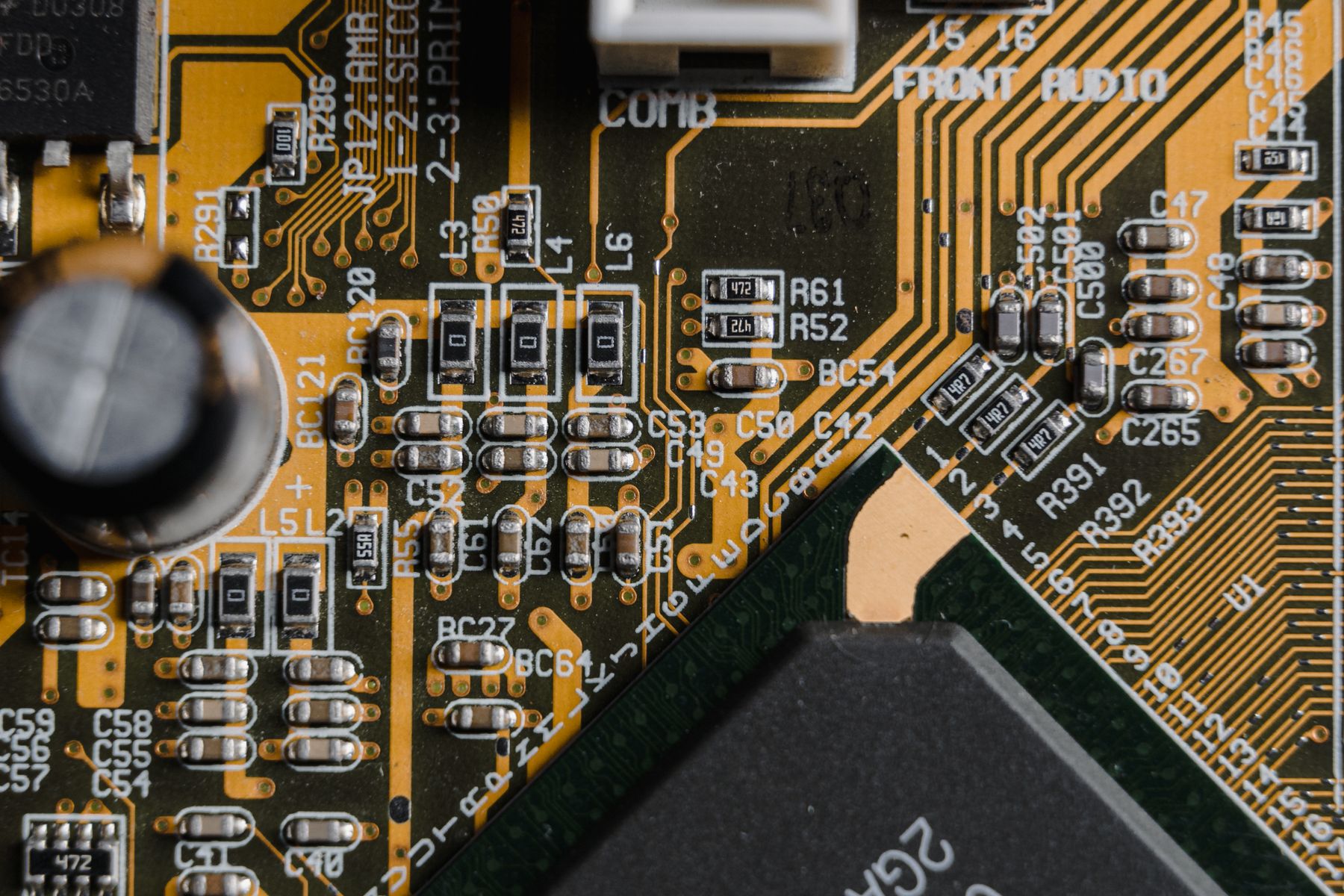
Alibaba’s latest AI announcement is notable for more than a faster accelerator. At its Apsara conference in Hangzhou, the company unveiled the Zhenwu V900, a new AI chip from its T-Head semiconductor unit, while also outlining plans to train a next-generation Qwen model with between 5 trillion and 10 trillion parameters. Reuters reported that Alibaba says the V900 delivers roughly three times the performance of its predecessor and is designed to operate in large clusters, with mass production expected in early 2027.
The combination matters because it shows where the AI infrastructure race is heading. The competitive unit is increasingly not a single model, GPU or cloud service. It is the complete stack: silicon, high-speed interconnects, servers, data centers, model training software and the models themselves.
For technology buyers, that shift changes what should be measured. A spectacular chip specification can be important, but it does not by itself answer whether a platform is economical, portable or ready for production.
Why Alibaba is building more of the stack itself
Frontier AI models consume enormous amounts of compute. That creates strategic pressure for cloud companies that depend heavily on external accelerator suppliers. Owning more of the hardware stack can give a provider tighter control over cost, supply, optimization and deployment schedules.
Alibaba already operates one of the largest cloud businesses in China and develops the Qwen family of models. Adding increasingly capable in-house accelerators gives it another lever. Software can be tuned for the chip, the chip can be designed around expected model workloads, and the data-center architecture can be built around both.
This does not mean third-party accelerators suddenly become irrelevant. Mature AI ecosystems include compilers, libraries, developer tools, networking and years of operational knowledge. Reproducing that ecosystem is much harder than fabricating a fast processor.
The V900 announcement is therefore best understood as evidence of vertical integration rather than proof that one chip has displaced an established platform.
The cluster matters more than the individual accelerator
Alibaba emphasized that the V900 can be connected into large clusters. That detail is central to modern AI infrastructure.
A frontier model is too large to treat each accelerator as an independent computer. Training and increasingly demanding inference workloads divide work across many devices. Those devices must exchange data quickly enough that communication does not erase the benefit of adding more compute.
That is why AI infrastructure comparisons need to include memory capacity, memory bandwidth, interconnect performance, topology, software scheduling and utilization. A theoretically faster accelerator can produce disappointing economics if expensive hardware spends too much time waiting for data or for other nodes in the cluster.
Enterprises evaluating AI clouds should consequently ask for workload-level metrics. Cost per generated token, time to train, sustained throughput, latency under concurrency and availability are more useful than a peak arithmetic figure in isolation.
Bigger Qwen models need careful interpretation
The other headline is Alibaba’s plan for a model with 5 trillion to 10 trillion parameters, compared with a reported 2.4 trillion parameters for its current flagship Qwen 3.8 Max.
Parameter counts are useful for understanding the scale of an engineering project, but they are poor substitutes for model evaluation. Architectures can use parameters differently. Mixture-of-experts systems may activate only part of a model for each token. Training data, post-training, tool use and inference-time reasoning can all have major effects on real-world quality.
A model with more parameters can also be more expensive to train and serve. If it improves a benchmark but doubles the cost of a useful business task, the larger model may not be the better operational choice.
The right question is therefore not whether 10 trillion is larger than 2.4 trillion. It is whether the resulting system improves reliability and useful task completion enough to justify its infrastructure requirements.
The supply-chain angle is impossible to ignore
Alibaba’s chip push also reflects the changing semiconductor environment around Chinese AI companies. Access to the most advanced foreign accelerators has become a strategic constraint, increasing incentives to develop domestic alternatives and optimize around hardware that can be sourced more predictably.
That makes the V900 important even before independent benchmarks exist. A credible domestic accelerator can create supply optionality for Alibaba Cloud and its customers. If the hardware is paired with models designed around it, the company can potentially reduce dependence on an external roadmap.
But customers should distinguish supply independence from workload portability. A tightly integrated stack can be efficient while also making migration more difficult. Before committing large workloads, teams should examine supported frameworks, model formats, observability tools and how easily applications can move to another accelerator or cloud.
Data-center scale is becoming part of the product
Alibaba also outlined a goal for Alibaba Cloud data-center capacity to exceed 20 gigawatts by 2032, according to Reuters. That number reinforces the scale of the infrastructure problem. AI competition increasingly depends on power delivery, cooling, land, networking and construction schedules alongside semiconductor design.
For customers, this means cloud capacity should be evaluated as an operational resource rather than an abstract promise. A model can be excellent and an accelerator can be fast, yet a service can still face regional shortages or long provisioning queues.
Organizations planning large training or inference deployments should ask providers about regional capacity, reservation options, failure domains and the availability of equivalent hardware in secondary regions.
What to watch before the V900 reaches broad production
The most important next evidence will be independent performance data and real availability. Buyers should watch for benchmark results, supported software frameworks, memory specifications, interconnect details, power efficiency and pricing. Mass-production progress in 2027 will matter more than launch-day comparisons.
It will also be important to see how Alibaba exposes the hardware to cloud customers. A proprietary accelerator becomes much more useful when developers can deploy existing models with limited code changes and can measure performance with familiar tooling.
Alibaba’s announcement does not settle the AI chip race. It does show that the race is expanding. The companies with the strongest positions may be those that can coordinate chips, networks, data centers and models as one system. For enterprises, the practical response is to compare complete workloads and exit options, not just headline silicon specifications.
Editorial research note
How we reached this guidance
We reviewed Reuters and Associated Press reporting from September 22, 2026, then compared the new announcement with Alibaba Cloud's earlier 2026 disclosures about its Zhenwu accelerator roadmap. Performance and model-size claims are treated as company-reported until independently benchmarked.
Decision framework
| Scenario | Recommendation | Why |
|---|---|---|
| An enterprise interprets a new accelerator announcement as immediate production capacity | Separate announced specifications from mass-production timing and available cloud instances | Alibaba says the Zhenwu V900 is planned for mass production in early 2027, so today's announcement is not the same as broad deployability. |
| A buyer compares AI infrastructure using accelerator speed alone | Evaluate networking, memory, software compatibility and cluster-scale efficiency together | Large AI systems depend on the complete compute stack, and Alibaba is positioning the V900 as part of large clusters rather than as an isolated chip. |
| A team assumes a larger parameter count automatically produces a better model | Wait for task-specific evaluations and deployment economics | Parameter count describes scale, not reliability, latency, cost or usefulness for a particular workload. |
Primary references
- Reuters: Alibaba deepens AI push with new chip and bigger model plan
- Associated Press: Alibaba unveils new powerful chip and ambitious AI model plans
- Alibaba Cloud: earlier 2026 AI chip and cloud-stack announcement
Reviewed on September 22, 2026. Unless an article explicitly states that TECHMUNDI performed hands-on testing, our guides are research-based and do not present specification or documentation review as first-hand product testing.
Continue reading
More on Artificial Intelligence
 Claude Opus 5.5 Makes AI Model Selection a Cost-and-Control Decision, Not Just a Benchmark Race
 Ema’s $77M Raise Highlights a Bigger Shift: AI Agents Are Challenging Per-Seat Software Pricing
 Huawei’s Peerium Architecture Targets a Million AI Processors — and Shows Why Interconnects Now Matter as Much as Chips