Only About 7,000 Humanoid Robots Sold in 2025: The Gap Between Robotics Hype and Deployment Is Still Huge
New industry data puts commercial humanoid adoption in perspective. Here is why pilots matter, what is blocking scale and which metrics buyers should watch next.
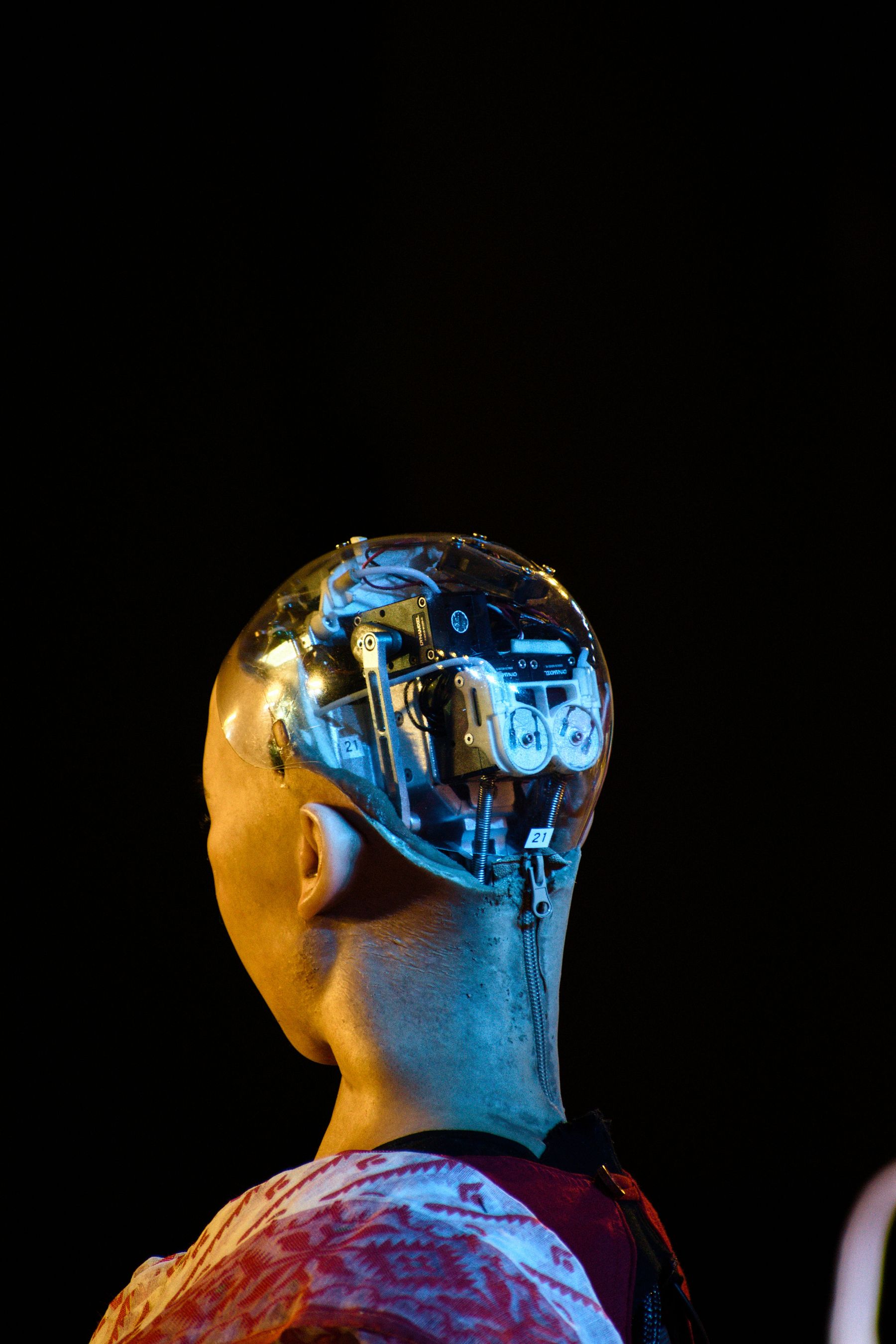
Humanoid robots receive an extraordinary amount of attention relative to the number actually working in commercial environments.
New figures highlighted by Reuters put that imbalance into perspective. According to data compiled by the International Federation of Robotics, around 7,000 humanoid robots were sold worldwide in 2025 for industrial and professional service applications.
Seven thousand is not trivial for an emerging product category, but it is tiny compared with the installed base of conventional automation.
The IFR reported 542,000 industrial robot installations in 2024 and more than 199,000 professional service robots sold in the same period. Humanoids therefore remain a small experiment inside a much larger robotics economy.
This does not mean the technology is failing. It means the market is still in the stage where demonstrations, research purchases and factory pilots are more common than proven mass deployment.
For companies evaluating humanoids, that distinction is essential.
A humanoid is valuable only when the environment favors the human form
Factories, warehouses and buildings were designed around people.
Doors, stairs, shelves, tools and workstations are positioned for human bodies. That creates the central argument for humanoid robots: instead of rebuilding the environment around a machine, build a machine that can use the existing environment.
The idea is attractive.
A sufficiently capable humanoid could move between tasks without requiring a custom automation cell for each one. It could carry items, use tools, manipulate controls and work in locations where fixed industrial robots cannot.
The problem is that generality is difficult.
A traditional industrial arm can repeat a constrained motion with exceptional speed and reliability. A humanoid has to balance, perceive its environment, plan movement, handle unfamiliar objects and recover when something unexpected happens.
Every additional capability introduces more ways to fail.
The first commercial wins will probably be narrow
The most realistic near-term deployments are not fully general household robots.
They are robots assigned to repetitive tasks in controlled environments where the human form provides a practical advantage.
Automotive factories are a common testing ground because the environment is structured, companies already understand robotics and many jobs involve moving through spaces built for people.
A successful pilot might involve transporting parts, tending machines or performing repetitive handling tasks.
The key is to define the task narrowly enough to measure.
A company should record uptime, intervention frequency, task completion rate, cycle time and safety incidents. It should also measure how much human labor is actually displaced or redirected.
A robot that works impressively for ten minutes during a demonstration is very different from one that completes an eight-hour shift for months.
Reliability is more important than spectacle
Humanoid robotics is unusually vulnerable to demo bias.
Walking, dancing and manipulating objects look impressive on video because they communicate progress immediately. Industrial customers care about different numbers.
How often does the robot need help? How long does it operate between failures? How quickly can it recover? How much maintenance does it need? Can it work safely around people?
A system with 95% task reliability may sound excellent until the task is performed thousands of times.
At industrial scale, the final few percentage points of reliability can determine whether automation saves money or creates a new support burden.
That is one reason conventional robots remain difficult to displace. They are optimized for a specific job and have decades of engineering behind them.
Physical AI is improving the software side
Advances in generative AI and robotics learning are making humanoids more adaptable.
The IFR has highlighted the role of AI in teaching robots through demonstrations and enabling systems to generalize beyond fixed programming.
This is important because traditional robot programming can be expensive. Engineers often define motion and behavior carefully for one task.
Learning-based systems can potentially reduce that setup time and allow one platform to acquire more skills.
However, physical AI has a tougher feedback loop than a chatbot.
A language model can generate a bad sentence with limited consequence. A physical machine can drop a part, collide with equipment or injure somebody.
Robotics therefore needs strong safety layers, simulation, monitoring and conservative deployment procedures even as models become more capable.
Hardware economics remain difficult
Humanoid robots require actuators, sensors, batteries, compute, mechanical structures and sophisticated control systems.
Those components create cost before maintenance is considered.
The economic comparison should not be based only on the purchase price. Companies need to include installation, supervision, downtime, repairs, spare parts, software subscriptions and integration work.
Then compare that total with alternatives.
A wheeled autonomous mobile robot may solve a transport problem more cheaply. A fixed arm may be better for repetitive manipulation. A conveyor may be the simplest option of all.
The human form should earn its complexity.
Forecasts need a small-base warning
Market forecasts for humanoids can show spectacular growth rates because the starting number is so low.
Moving from 7,000 units to tens of thousands would represent enormous percentage growth while still leaving humanoids small compared with conventional automation.
That does not make forecasts useless. It means buyers should not interpret them as proof that a general-purpose robot economy is already established.
More useful signals will be repeat orders from industrial customers, larger paid fleets, longer operating histories and evidence that customers expand deployments after pilots.
Those behaviors show that economics are working.
China is an important market to watch
China is already the world’s largest market for industrial robots and has placed significant policy emphasis on advanced robotics.
That gives Chinese manufacturers a large domestic automation ecosystem in which to test humanoid systems.
Scale can help reduce component costs, create supply chains and generate operational data.
Other regions will compete with different strengths, including software, advanced AI models, semiconductor ecosystems and specialized industrial engineering.
The market may therefore develop differently across countries rather than converging on one universal robot design.
Buyers should start with the job, not the robot
A company interested in humanoids should identify tasks that are difficult to automate with existing equipment but repetitive enough to justify investment.
Then define success before beginning a pilot.
How many cycles per hour are required? What is the acceptable intervention rate? What safety certification is needed? How many hours per day must the system operate? What is the payback period?
Those questions protect organizations from buying technology first and searching for a problem later.
The new 7,000-unit figure is useful because it provides a reality check.
Humanoid robotics is advancing quickly, and investment may eventually turn the category into a major automation market. Today, however, most of the opportunity is still being proven.
The companies that benefit first are likely to be those that treat humanoids as industrial equipment with measurable economics, not as science-fiction products that are valuable simply because they look human.
Editorial research note
How we reached this guidance
We reviewed Reuters reporting based on new International Federation of Robotics data and IFR material on humanoid robots and industrial automation. The article separates measured 2025 sales from forecasts for future shipments and treats demonstrations and pilot programs differently from sustained commercial deployment.
Decision framework
| Scenario | Recommendation | Why |
|---|---|---|
| A manufacturer is considering a humanoid because demonstrations look impressive | Evaluate a narrowly defined task with measurable uptime and labor impact | The current market remains dominated by pilots and research use, so repeatable task economics matter more than general-purpose demonstrations. |
| A buyer compares humanoids with conventional industrial robots | Use the least complex form factor that can perform the task | Traditional automation is mature, cheaper and highly reliable for many structured jobs where a human-shaped machine offers little advantage. |
| An investor or operator uses shipment forecasts as proof of near-term adoption | Track paid deployments, utilization and repeat orders instead | Forecasts can grow rapidly from a small base, while sustained commercial use requires reliability, safety and clear return on investment. |
Primary references
- Reuters: Humanoid robot sales tally hit 7,000 globally last year
- International Federation of Robotics: Humanoid Robots - Vision and Reality
- International Federation of Robotics: World Robotics market context
Reviewed on September 23, 2026. Unless an article explicitly states that TECHMUNDI performed hands-on testing, our guides are research-based and do not present specification or documentation review as first-hand product testing.
Continue reading
More on Artificial Intelligence
 Claude Opus 5.5 Makes AI Model Selection a Cost-and-Control Decision, Not Just a Benchmark Race
 Ema’s $77M Raise Highlights a Bigger Shift: AI Agents Are Challenging Per-Seat Software Pricing
 Huawei’s Peerium Architecture Targets a Million AI Processors — and Shows Why Interconnects Now Matter as Much as Chips