Isaac ROS 5.0 Lets AI Agents Help Build Robots — and That Changes the Robotics Software Bottleneck
NVIDIA Isaac ROS 5.0 adds agent skills, ROS 2 Lyrical support and accelerated memory transport. Here is what robotics teams should evaluate before adopting it.
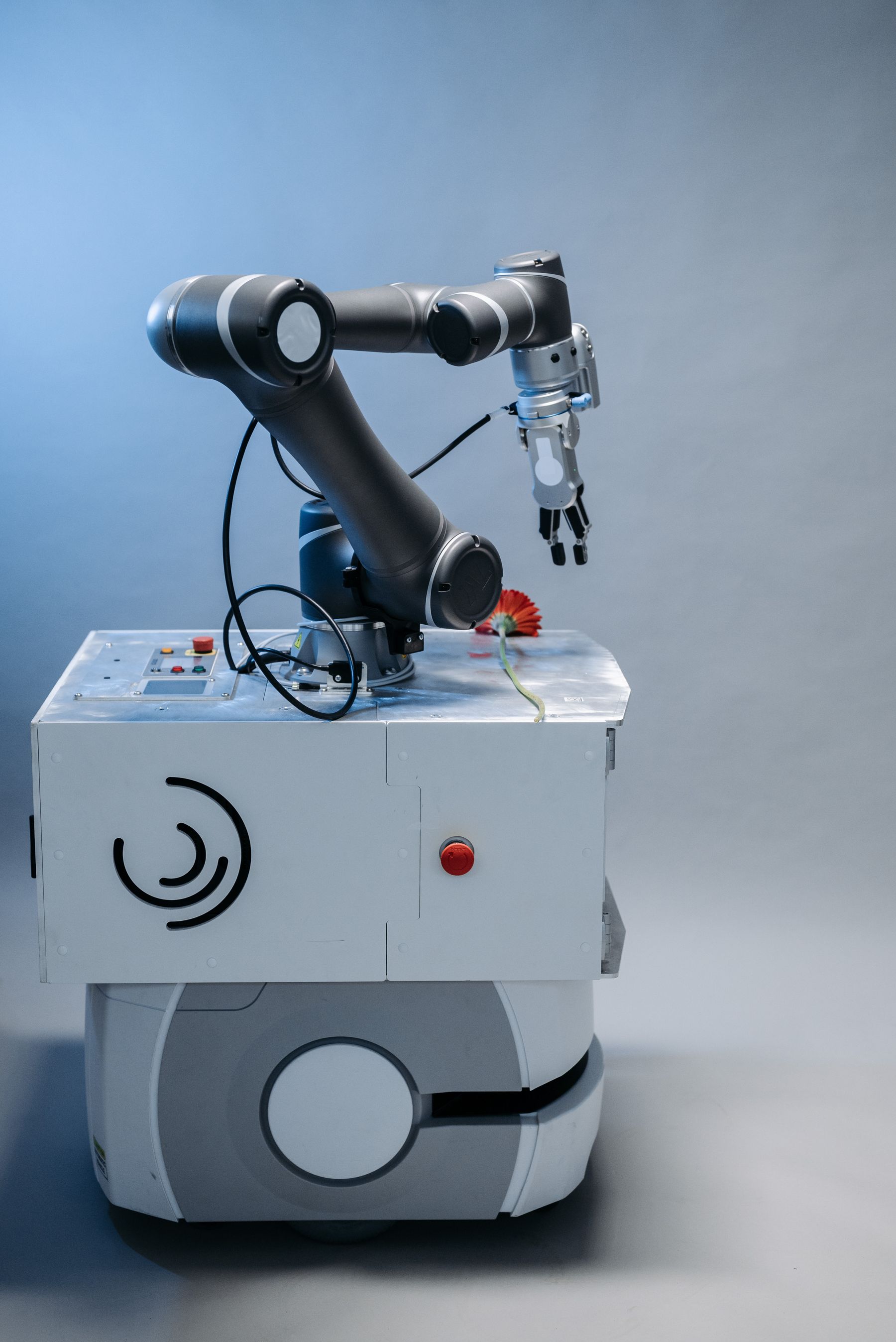
Robotics has a software integration problem as much as it has a hardware problem. A modern robot may combine cameras, lidar, depth sensors, neural-network inference, localization, motion planning and control loops, often across a graph of ROS 2 nodes written by different teams. Making all of those pieces work reliably can consume more engineering time than demonstrating the underlying AI model.
NVIDIA’s Isaac ROS 5.0 release, announced September 22 at ROSCon 2026 in Toronto, attacks that bottleneck from two directions. It adds AI agent skills intended to help coding assistants perform Isaac ROS development tasks, and it moves the platform onto ROS 2 Lyrical with accelerated memory transport designed to reduce unnecessary movement of large GPU workloads.
The combination is important because it brings agentic AI into the process of building physical AI. The immediate value is not a robot that suddenly reasons autonomously. It is a development stack in which an AI coding agent can understand specific robotics workflows and help engineers migrate, configure and optimize them.
Agent skills are more specific than generic coding prompts
General coding assistants can already write C++ or Python, but robotics work depends on environment details that a generic model may not understand reliably. A package can compile while still using the wrong message type, introducing an extra CPU copy or breaking assumptions elsewhere in a ROS graph.
Isaac ROS 5.0 introduces skills in an open Agent Skills format. NVIDIA says these skills can help activate the Isaac ROS development environment and assist with migration workflows. The company’s technical example shows an agent using a dedicated migration skill to inspect a CUDA-accelerated ROS 2 node, trace data movement, propose an interface-preserving refactor and verify that an accelerated transport path is enabled.
That is a more useful pattern than asking an assistant to “optimize my robot.” The skill gives the agent a bounded task, relevant platform knowledge and an expected validation process.
For engineering teams, the lesson is to evaluate agents on repeatable maintenance tasks first. Dependency updates, package migration, configuration checks and well-tested performance refactors are better starting points than safety-critical control logic.
Memory movement is a hidden robotics tax
Robots generate large streams of data. Cameras produce images, depth sensors produce dense arrays, lidar produces point clouds and neural networks create tensors that may be passed through several processing stages.
If each stage copies data from GPU memory to CPU memory and back again, a powerful accelerator can spend valuable time moving bytes instead of performing useful computation. That increases latency and consumes memory bandwidth and power — all particularly important on edge devices with limited thermal budgets.
NVIDIA says ROS 2 Lyrical includes accelerated memory transports that can move large data such as tensors and point clouds with near-zero overhead in suitable pipelines. Its technical documentation describes rosidl::Buffer and a CUDA buffer backend that allow ROS 2 nodes to exchange GPU-resident payloads without abandoning standard ROS message boundaries.
This is strategically significant. Hardware acceleration becomes easier to adopt when developers do not have to replace the software architecture around it.
But teams should benchmark rather than assume. A pipeline dominated by small messages may see little benefit. A perception graph moving high-resolution frames through multiple GPU stages may see much more.
ROS compatibility remains a major advantage
Robotics platforms often face a difficult tradeoff between optimized proprietary stacks and broad ecosystem compatibility. ROS matters because it gives developers common concepts for nodes, messages, packages and hardware integration.
Isaac ROS is designed to sit on top of that ecosystem rather than replace it. NVIDIA describes the platform as an open-source software foundation built on ROS 2, with accelerated packages for perception, localization, mapping, manipulation and inference.
That architecture lowers adoption risk for teams that already use ROS. Engineers can accelerate selected nodes while preserving familiar interfaces elsewhere in the system.
Still, Isaac ROS 5.0’s move to ROS 2 Lyrical means production teams need a migration plan. A robot fleet is not a web application that can always be upgraded overnight. Hardware drivers, vendor packages and certified components may lag behind the newest distribution.
Before standardizing on the release, teams should inventory dependencies and identify packages that cannot yet move.
AI-assisted robotics needs stronger validation, not weaker validation
The arrival of coding agents can shorten development cycles, but physical systems raise the cost of mistakes. A generated change that causes a web service to fail is inconvenient. A generated change that alters a robot’s timing or control behavior can damage equipment or create a safety risk.
That means agentic robotics development should increase investment in simulation, automated tests and hardware-in-the-loop validation.
A useful workflow is for an agent to produce a proposed change, run static checks and unit tests, then exercise the package in simulation before a human approves deployment to a real robot. Performance changes should be measured against recorded sensor data or repeatable scenarios rather than judged from code appearance.
The more work an agent can perform, the more important these gates become.
The broader physical-AI platform strategy
Isaac ROS is one layer in NVIDIA’s larger robotics stack. Isaac Sim addresses simulation, Isaac Lab supports robot learning, Jetson provides edge compute and NVIDIA’s models and accelerated libraries cover perception and reasoning workloads.
Adding agent skills creates another connection between those layers. A developer assistant can potentially understand how to configure the environment, migrate a node or choose an optimized path without requiring every engineer to memorize platform-specific details.
This could be especially valuable to smaller robotics teams. Large manufacturers can maintain specialists for GPU optimization, simulation, perception and embedded systems. Startups and research groups often need the same engineers to cover several of those areas.
The risk is platform dependence. The easier a vendor makes its integrated stack, the more important it becomes to preserve clean ROS interfaces and understand which optimizations are portable.
What robotics teams should test now
Teams interested in Isaac ROS 5.0 do not need to redesign an entire robot. A better evaluation is narrow and measurable.
Choose one package with a clear performance profile. Record its CPU and GPU utilization, latency and memory behavior. Use the new agent workflow to migrate or optimize it. Run the same tests afterward and inspect every generated change. Then repeat the test on the actual target hardware.
If the workflow saves engineering time without reducing reliability, expand it gradually.
Isaac ROS 5.0’s most interesting idea is not that AI agents can write robotics code. Coding assistants already do that. The more consequential change is that robotics platforms are beginning to package expert operational knowledge into machine-readable skills. If those skills remain inspectable and testable, they can turn AI from a generic coding helper into a practical participant in the robotics engineering toolchain.
Editorial research note
How we reached this guidance
We reviewed NVIDIA's September 22 Isaac ROS 5.0 announcement, its ROSCon 2026 materials and technical documentation for agent-assisted CUDA transport migration. We distinguish developer tooling from autonomous robot behavior and treat performance benefits as workload-dependent until measured on a team's own robot and sensor graph.
Decision framework
| Scenario | Recommendation | Why |
|---|---|---|
| A ROS team spends substantial engineering time migrating accelerated nodes and development environments | Pilot Isaac ROS agent skills on a non-safety-critical package with strong tests | The new skills can inspect and modify development workflows, but generated changes still need deterministic validation before deployment to physical machines. |
| A robot moves large tensors or point clouds repeatedly between CPU and GPU memory | Benchmark ROS 2 Lyrical accelerated memory transport on the real sensor pipeline | Avoiding unnecessary memory copies can reduce latency, but gains depend on graph topology, hardware and whether the payload can remain GPU-resident. |
| A production fleet depends on an older ROS distribution | Plan compatibility and migration before standardizing on Isaac ROS 5.0 | Isaac ROS 5.0 moves its supported ROS distribution to ROS 2 Lyrical, which can affect packages, dependencies and fleet maintenance. |
Primary references
- NVIDIA Blog: Isaac ROS 5.0 advances agentic, open-source robotics development
- NVIDIA Developer: accelerating a ROS 2 node with an AI agent
- NVIDIA: ROSCon 2026 program and ROS 2 Lyrical sessions
Reviewed on September 23, 2026. Unless an article explicitly states that TECHMUNDI performed hands-on testing, our guides are research-based and do not present specification or documentation review as first-hand product testing.
Continue reading
More on Artificial Intelligence
 Claude Opus 5.5 Makes AI Model Selection a Cost-and-Control Decision, Not Just a Benchmark Race
 Ema’s $77M Raise Highlights a Bigger Shift: AI Agents Are Challenging Per-Seat Software Pricing
 Huawei’s Peerium Architecture Targets a Million AI Processors — and Shows Why Interconnects Now Matter as Much as Chips