Smart Rings Are Starting to Become Computers: What Ultrahuman and Qualcomm’s Bet Changes
Ultrahuman’s $70 million round and Qualcomm partnership point toward smart rings that run software locally instead of acting only as health trackers.
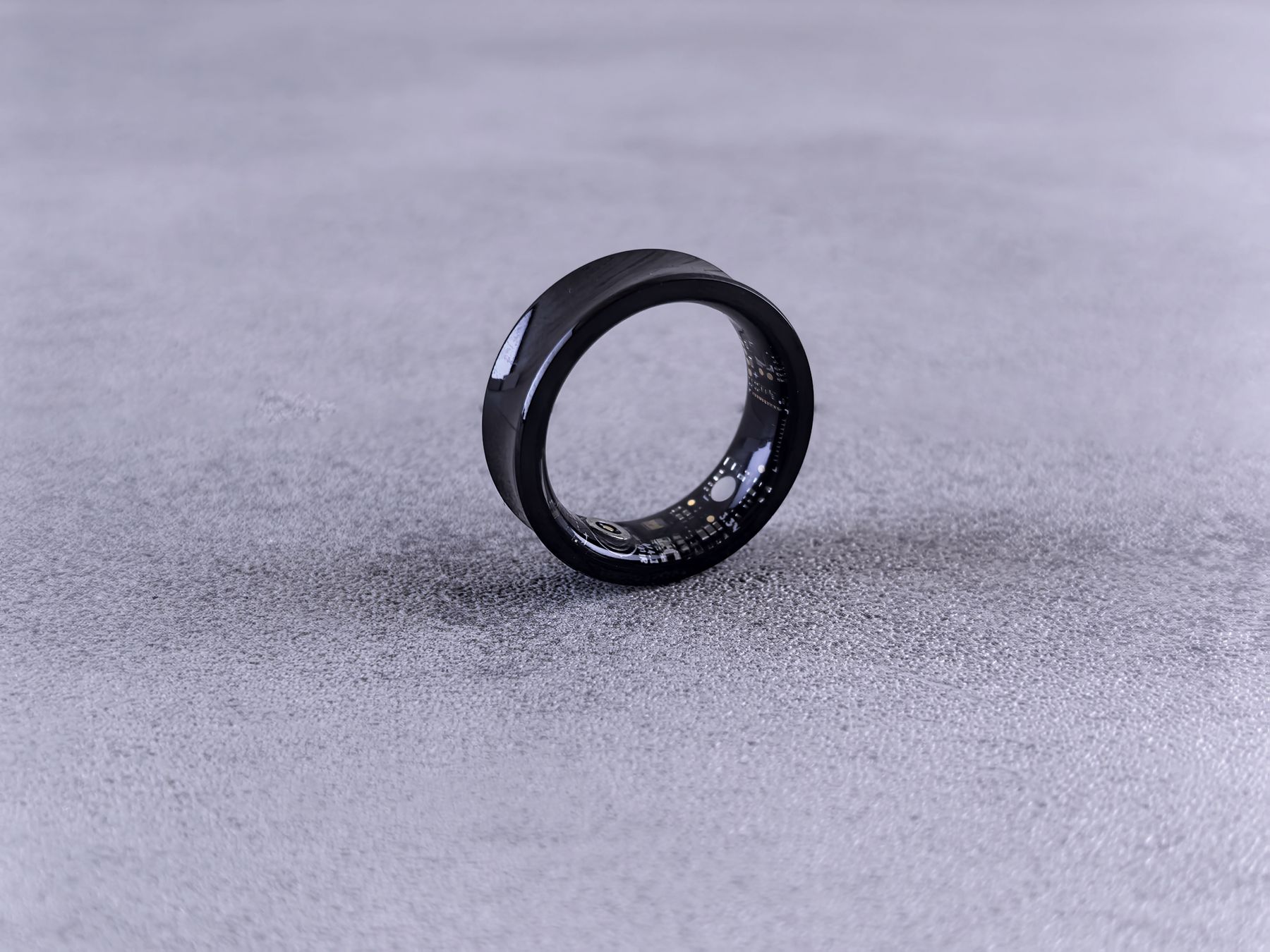
Smart rings have mostly been sold as miniature health trackers: collect heart-rate, temperature, movement and sleep signals, then send the data to a phone where the useful interpretation happens. Ultrahuman is now arguing that the category can become something broader — a computing interface worn on a finger.
The company raised $70 million in September in a financing round that included Qualcomm Ventures and Labcorp. More important than the funding headline is the product direction behind it. Ultrahuman told TechCrunch that it is working with Qualcomm on a future ring using the chipmaker’s silicon, with enough local compute to run more software and algorithms directly on the wearable. The company has discussed uses ranging from AI interaction to gesture control, games, a pointer and even a car key.
That is a significant change in the design question. Instead of asking how many sensors can fit into a ring, manufacturers can start asking what applications should execute on it.
Why local compute matters on something this small
Wearables have always faced a difficult triangle: battery life, compute capability and physical size. A ring makes that tradeoff especially severe because there is little room for a battery, antennas, sensors and processing hardware.
Historically, the easiest solution has been to make the ring a sensor endpoint. It gathers data efficiently, performs limited signal processing and relies on a paired phone or cloud service for heavier work.
More capable low-power processors can shift that boundary. Algorithms that currently require a phone may execute on the ring, potentially improving responsiveness and allowing some functions to work when the phone is unavailable. Local processing can also reduce the amount of raw sensor data that needs to leave the device.
But "on-device" should not be confused with "fully private." A ring may process one algorithm locally while its companion app still synchronizes summaries, account data or other signals to cloud infrastructure. Buyers interested in privacy should examine the complete path rather than treating the processor location as a guarantee.
A ring can be an input device, not only a sensor
The finger is an unusually interesting location for human-computer interaction. Small motions that would be awkward to detect from a phone can be obvious to a device attached directly to the hand.
Ultrahuman has discussed using rings as pointers, game controllers and AI interfaces. Those ideas are plausible because the ring can combine motion sensing with physiological context. A game could theoretically receive movement information while also knowing that the player’s heart rate has changed. An AI interface could use a gesture to trigger an action without requiring the user to pull out a phone.
The challenge is avoiding novelty for novelty’s sake. A gesture interface is valuable only when it is faster, more reliable or more discreet than touching a screen, pressing a watch button or speaking aloud.
Developers should therefore judge future ring APIs by latency, false-trigger rates, discoverability and battery cost. A clever gesture that drains the ring in hours would undermine the main advantage of a device designed to be worn continuously.
The developer platform is the real test
Calling a wearable a computer is easy. Building a platform is harder.
For third-party software to matter, developers need stable APIs, documentation, permissions, debugging tools and a distribution mechanism. They also need a clear understanding of how much processing time, memory and sensor access an application can consume.
This is where Qualcomm’s involvement could become strategically important. The company has deep experience building low-power mobile and wearable processors and developer ecosystems. If the partnership results in hardware with a useful local compute budget and accessible software interfaces, smart rings could become programmable in ways current health trackers are not.
That outcome is not guaranteed. The partnership and financing are real; the mature app ecosystem is not here yet. Teams should separate those two facts.
Health remains the strongest reason to wear one continuously
Ultrahuman’s expansion does not mean health tracking becomes secondary. Continuous wear is valuable precisely because it creates longitudinal data.
The company’s Pulsomics initiative illustrates this direction. The opt-in research program collects overnight pulse signals alongside demographic and lifestyle information with the goal of building more representative models. Ultrahuman says participants can contribute data from rings and, where available, other sources such as continuous glucose monitoring and blood panels.
That approach also highlights why consent and data governance matter. Biometric information can be unusually sensitive, and combining multiple signals increases both its potential usefulness and its sensitivity.
Users should distinguish between wellness insights, research participation and clinically validated medical functions. More data and more AI do not automatically turn a consumer wearable into a diagnostic device.
What buyers should do now
The most sensible reason to buy a smart ring today remains what the device can do today: comfortable continuous sensing, useful sleep and recovery information, battery life and an app experience that fits the user’s routine.
Future computing features should be treated as upside, not as a purchase guarantee. A promised developer ecosystem can change, slip or arrive with hardware limitations that are not obvious in an announcement.
For developers, however, this is a category worth watching closely. A programmable ring has characteristics that phones and watches do not: it is unobtrusive, sits directly on the hand and can potentially combine gestures with continuous physiological context.
The larger trend is clear. Wearable computing is moving away from the assumption that every accessory is merely a remote sensor for the smartphone. As processors become smaller and more efficient, more intelligence can migrate to the body itself. Ultrahuman and Qualcomm’s bet is that the ring can be one of those computing surfaces. The decisive question will be whether software developers find interactions compelling enough that people want the ring for more than tracking sleep.
Editorial research note
How we reached this guidance
We reviewed Ultrahuman's September 3 financing announcement, its September 1 Pulsomics research announcement and TechCrunch reporting on the Qualcomm collaboration. Product-roadmap claims are treated as company plans rather than shipping capabilities, and health features are not presented as medical diagnosis.
Decision framework
| Scenario | Recommendation | Why |
|---|---|---|
| A buyer expects today's smart ring to replace a phone or smartwatch | Buy for shipping health and battery features, not future platform promises | Ultrahuman's broader computer-like ring vision includes capabilities that are still on the roadmap. |
| A developer is interested in ring-based interaction | Watch for the promised third-party software model and hardware APIs before committing | A wearable becomes a platform only when developers have stable interfaces, distribution and useful compute budgets. |
| A user wants more local processing for sensitive biometric data | Evaluate what actually runs on-device and what still reaches phone or cloud services | More ring compute can reduce dependency on external processing, but it does not automatically make the full data pipeline local. |
Primary references
- Ultrahuman: $70 million financing for next-generation human-computer interface
- TechCrunch: Qualcomm backs Ultrahuman in $70M smart-ring round
- Ultrahuman: Pulsomics research program
Reviewed on September 23, 2026. Unless an article explicitly states that TECHMUNDI performed hands-on testing, our guides are research-based and do not present specification or documentation review as first-hand product testing.
Continue reading